
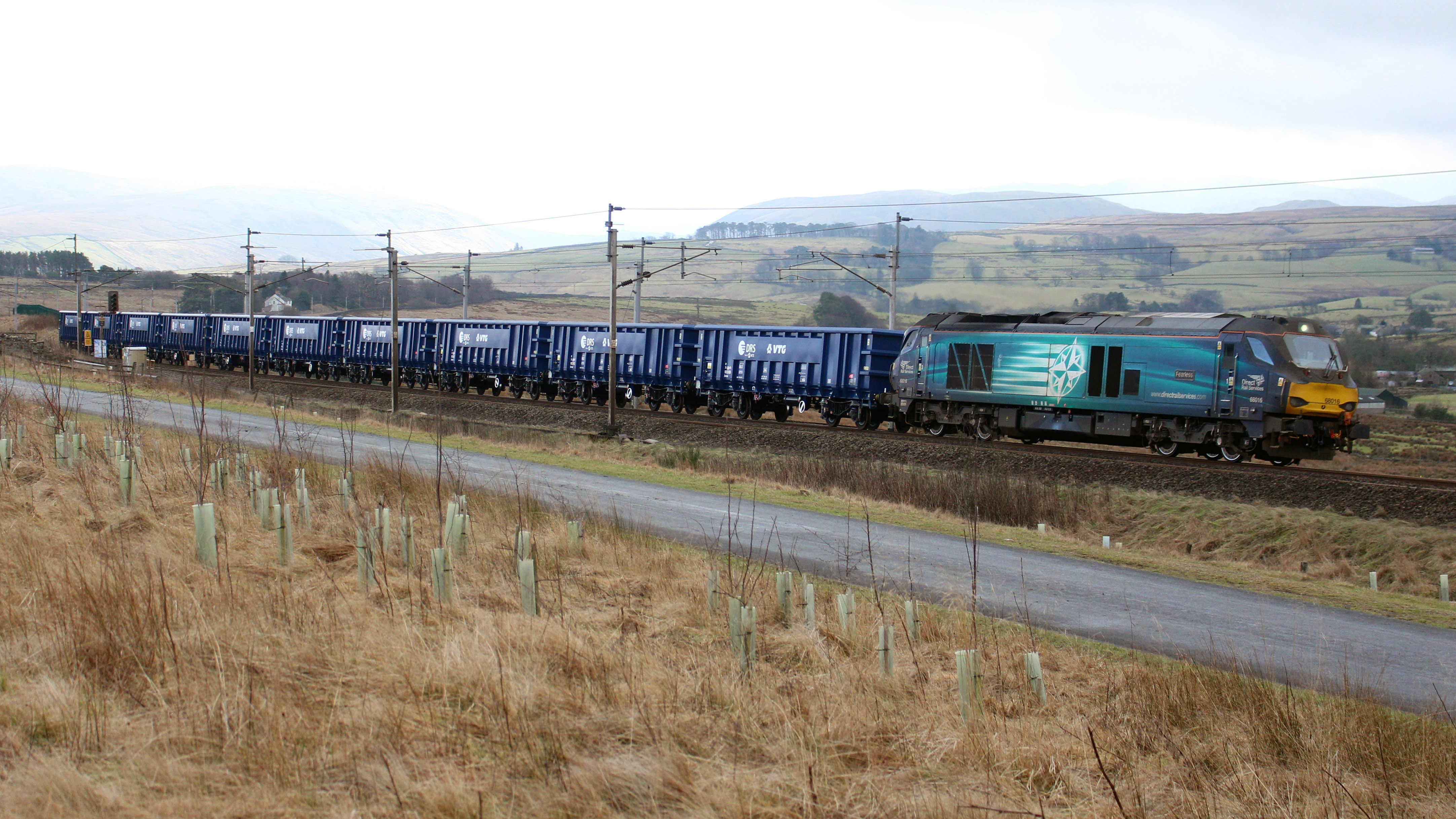
Nuclear Transport Solutions (NTS), through its rail division Direct Rail Services (DRS), has completed a major rail freight campaign supporting a nationally significant environmental protection project in Cumbria.
The final train carrying essential aggregate for the Southern Trench Interim Membrane (STIM) project arrived at the Low Level Waste (LLW) Repository around a month ahead of schedule.
Since the first train ran in February 2025, NTS has transported approximately 330,000 tonnes of aggregate to the site on over 350 rail services, helping Nuclear Waste Services (NWS) progress critical work to protect the environment and support the long-term management of the UK’s low level radioactive waste.
Delivering the material by rail has generated significant environmental and community benefits. The campaign removed over 17,000 HGV journeys from local roads, preventing more than one million lorry miles through nearby communities.
Throughout the campaign, each train carried the equivalent load of around 36 HGVs, demonstrating the efficiency of rail for transporting bulk construction materials while reducing congestion and vehicle movements on local roads.
The full programme is estimated to have saved more than 700 tonnes of carbon dioxide emissions compared to road, as rail freight can generate up to 76% fewer carbon emissions than equivalent road transport.
Tony Hewitson, Interim Managing Director of NTS Rail, said: “This project is a fantastic example of how rail freight can support major national infrastructure and environmental programmes while delivering tangible benefits for local communities.
“Completing these deliveries ahead of schedule reflects the professionalism and commitment of our colleagues, customers and supply chain partners. It also demonstrates why rail is the obvious choice for moving large volumes of material safely, efficiently and sustainably.”
The aggregate was delivered directly to the repository site’s rail sidings before being transferred onto the trench cap as part of the STIM construction programme.
The STIM project involves replacing the protective membrane covering the southern legacy disposal trenches at the repository. The membrane prevents rainwater from reaching the waste beneath it and is a key step towards the future final capping of the site’s northern trenches.
The successful completion of the campaign marks another example of how NTS is using rail freight to support the UK’s nuclear sector while contributing to wider sustainability goals through the reduction of road traffic and carbon emissions.